

The highly anticipated CBA showdown between Guangdong and Beijing kept fans on the edge of their seats until the final buzzer. With playoff implications at stake, the game went down to the wire, with Guangdong securing a dramatic 102-99 victory on a buzzer-beater that ignited the home crowd. However, the aftermath was overshadowed by controversy over officiating, as Beijing’s beat reporter openly criticized the refereeing, calling it “blatantly biased.”
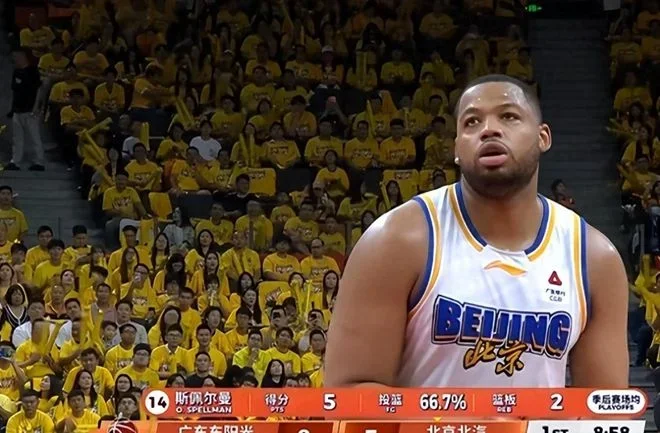
Beijing started strong, hitting 8 of 14 three-pointers in the first half and maintaining a slim lead. Guangdong relied heavily on Hu Mingxuan and Quinn, who kept the team in the game with consistent scoring. The physicality was relentless, with every possession dripping with intensity.
In the third quarter, Guangdong found its rhythm, hitting threes and pushing the pace to mount a impressive run. Just when it seemed they would pull away, Zhang Haojia’s defensive lapses allowed Beijing to get open looks from beyond the arc, despite pre-game emphasis on rotations. As a result, Guangdong couldn’t extend the lead, forcing overtime.
Overtime was a back-and-forth battle, with both teams trading baskets. Guangdong capitalized on a last-second attempt to seal the win, but the celebration was short-lived. Beijing reporter Yong Fangfang immediately voiced his frustration over what he deemed questionable calls by the referees.
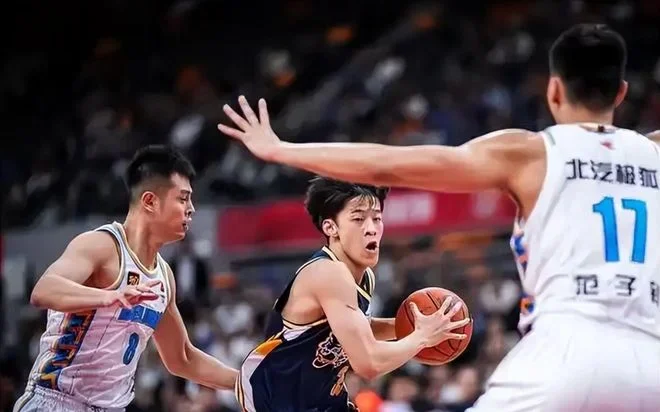
Yong specifically pointed to the earlier jump-ball call involving Zhou Qi, as well as what he called inconsistent physical-contact decisions. “We need to adapt to the officiating,” he said, but his tone clearly indicated displeasure. This isn’t the first time CBA officiating has drawn criticism this season. Previous incidents, such as Shanxi foreign player Diaro’s fine for a “money-counting” gesture and Ningbo’s Ru Tubula being suspended for verbal misconduct, have highlighted disparities in punishment severity.
According to CBA rules, each overtime period is five minutes, and the buzzer-beater was clean—released before the buzzer and through the hoop. The core controversy remains the inconsistent standard for contact calls, which not only affects player performance but also erodes public trust in the league’s integrity.
Beyond officiating, the game exposed a lingering issue for Guangdong: Zhang Haojia’s struggles. Playing 26 minutes, he finished with 0 points and 4 fouls, missing two wide-open shots and frequently losing his man defensively. His average of 2.3 defensive lapses per game has become a vulnerability.
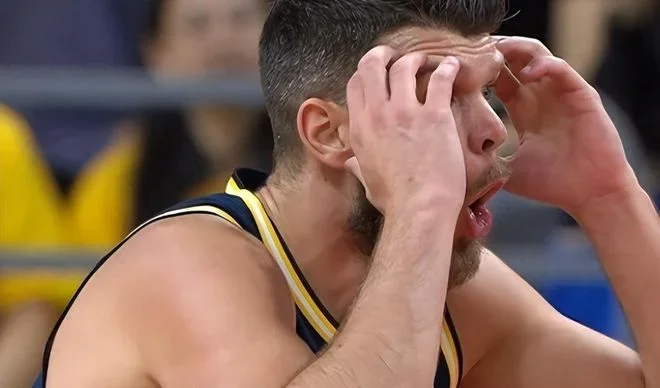
This loss carries heavy playoff implications. Beijing, a title contender with a stacked roster including Zhou Qi, Zhao Rui, McGee, and the returning Zeng Fanbo, had been comfortably in the top four with a first-round bye within reach. Dropping this game could jeopardize that spot, a major blow to their morale. Guangdong, meanwhile, boosted its playoff positioning, now closer to the top four and holding its fate in its own hands. The team’s perimeter shooting, led by Hu Mingxuan and Quinn, remains a strength, but the game highlighted its over-reliance on outside scoring and inconsistent depth contributions.
Despite the loss, Beijing demonstrated exceptional teamwork and shooting, with every player from the 1 to 4 positions capable of hitting threes—a challenge that stretched Guangdong’s defense to its limits. Guangdong’s typical trap-and-delay defense on screens was often dissected by Beijing’s quick ball movement and precise catch-and-shoot execution.
In post-game analysis, commentator Chen Zhenghao noted Beijing’s strong inside-outside balance, while criticizing Guangdong’s dependence on the long ball and Quinn’s decision to shoot a three instead of driving in the dying moments. Jia Lei highlighted how both teams’ three-point shooting and caliber kept the game close.
Regardless of the controversy, the game showcased thrilling basketball: Hu Mingxuan’s breakout, Beijing’s sharpshooting, and the overtime heroics. But the home-court officiating debate and Zhang Haojia’s defensive issues serve as reminders of areas needing improvement.
For Guangdong, the win is a morale booster, but plugging interior gaps and stabilizing role-player defense are essential for a deep playoff run. Beijing must quickly adjust to stabilize its standings and protect its postseason advantages. Ultimately, fans hope the CBA can standardize its officiating to let true talent decide the outcome—that’s the basketball everyone wants to see.
[Reference: CCTV Sports CBA regular season report on Guangdong vs. Beijing]
