

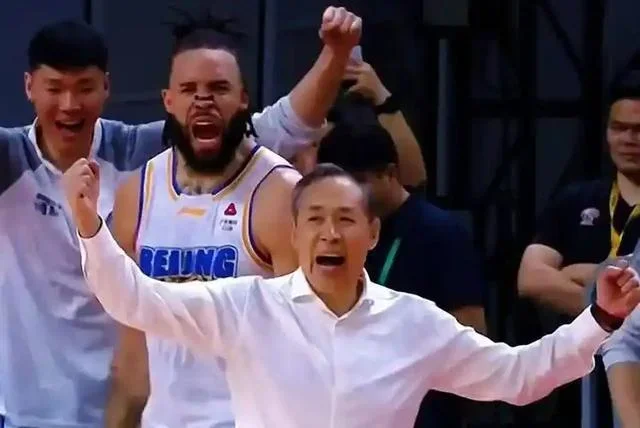
Most observers assumed that the semifinals would feature a grudge match between Guangdong and Shanghai, but Beijing Shougang has thrown a wrench into the entire playoff picture.
The round of 8 game was a single-elimination showdown, with the loser heading straight home, leaving no room for error. Guangdong, the defending champion and fourth seed in the regular season, traveled to Beijing as the perceived favorite due to their experience. However, they lost 73-88, crashing out in the quarterfinals and wasting an entire season’s effort.
The decisive factor wasn’t an import player but Beijing’s domestic cornerstone, Zhou Qi. 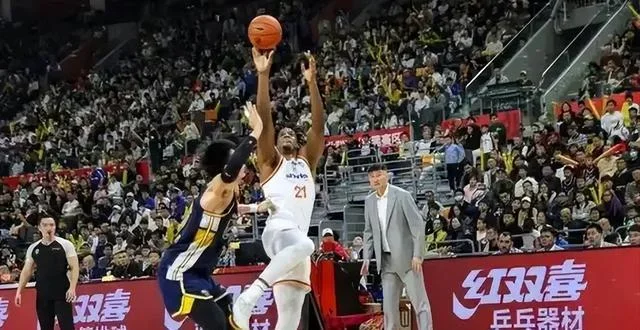 He logged 25 minutes, recording 18 points, 8 rebounds, and 4 blocks. After the game, he said, “The situation is good, I can hold on,” a statement that resonated with fans. Zhou Qi had been dealing with an ankle injury and barely ran during pre-game practice, yet he gritted his teeth and finished the game. Coach Xu Limin did not hold back, playing Zhou Qi throughout crucial stretches and avoiding unnecessary substitutions. This trust in his core player fortified Beijing’s defense.
Guangdong’s offense sputtered badly. They made only 5 of 20 three-point attempts and struggled at the free-throw line, far from the performance expected of a champion.
On the other side, Beijing’s imports struggled significantly. McGee played just 14 minutes, going 0-for-6 from the field and scoring zero points. Spellman fared even worse, playing 8 minutes and 48 seconds without a single field goal. Together, the two contributed just 5 points and 8 rebounds. Coach Xu pulled Spellman in the second quarter and never put him back in, signaling the coaching staff’s complete disappointment with both players.
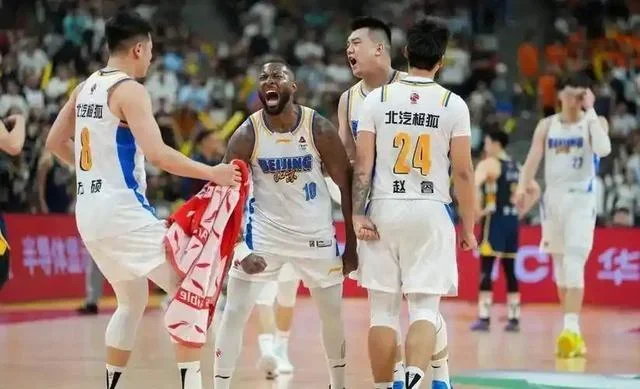
At first glance, it seemed Zhou Qi carried Beijing to victory alone, but a closer look at the statistics reveals that the entire Beijing team played gritty defense. They held Guangdong more than 20 points below their regular-season scoring average—a collective effort.
This game also exposed issues with pre-game professionalism. Earlier, Beasley was fined 10,000 yuan for failing to stand at attention during the national anthem, a reminder that imports must adhere to game etiquette both on and off the court. McGee had been posting vacation photos on social media before the playoffs, apparently not taking the crucial match seriously. Spellman then angrily pointed fingers at the coach after the game, both actions crossing the line of professional conduct.
**The Ripple Effect: Shanghai’s Title Plans and League Concerns**
The biggest losers after this result are likely Shanghai. They had beaten Guangdong three times in the regular season, including one 40-point blowout, and had expected to face a weary Guangdong in the semifinals. Now they must adjust their plans against Beijing—a team they hadn’t prepared for.
Under the CBA playoff format, the top four regular-season teams directly advance to the quarterfinals, and the winners face the second through fourth seeds. Shanghai, as the top seed, was supposed to meet fourth-seeded Guangdong but will now face fifth-seeded Beijing, completely upending their championship blueprint. Shanghai’s system relies heavily on import-driven pick-and-roll plays that shred defenses, but they now must confront Beijing’s interior anchor Zhou Qi and the defensive presence of Zhao Rui.
This game also highlights two core issues in the CBA. First is the professionalism of imports. Imports accounted for 42% of all points scored in the first round of the playoffs, directly influencing a team’s advancement chances. Yet players like McGee, who lack focus before key games and blame coaches afterward, are not isolated cases. The Beasley fine shows the league is tightening rules on import conduct and etiquette, and such lax behavior will likely face harsher penalties.
Second is the value of domestic core players. Beijing’s ability to win despite underwhelming imports underscores the leadership of a homegrown star like Zhou Qi. It reaffirms that relying solely on imports won’t lead to long-term success; domestic player development remains the league’s foundation.
While discussing the path for former players, one could point to Meng Lingyuan, who transitioned from a defensive role in Shanghai to become a youth coach after retiring in 2020. He obtained an FIBA-certified coaching license and is now a youth development backbone. This is the typical route for CBA players turned coaches: start at grassroots youth levels, accumulate experience, earn professional credentials, and gradually move to the first team. Zhou Qi could follow a similar path if he retires, first mentoring young players and then working on first-team tactics.
With this result, the playoff landscape has shifted dramatically. The defending champion Guangdong is out of the final four, while Beijing emerges as the biggest dark horse. Despite their import issues, Beijing’s domestic core resilience and grit have put them on the threshold of the semifinals. Shanghai’s title hunt must pivot as they study Beijing’s tactics and adjust their roster.
Whatever happens next, the semifinals promise to be more exciting than expected. The clash between a team held together by domestic stars and one built around an import-driven system will generate sparks.
In professional sports, no victory is ever guaranteed. Even if you beat a team by 40 points in the regular season, even if you are the defending champion, a moment of complacency can sink you. Beijing’s win was not just a game; it showcased the value of domestic core players and served as a warning to every team: imports matter, but professionalism and team resilience are what sustain success.
The upcoming semifinals will test whether Beijing can solve their import problems and whether Shanghai can crack Beijing’s defense. This is a battle between two systems—a true test of grit versus talent—and deserves fans’ full attention.
