


Unimaginable, unbelievable—these are the words we use to describe great athletic miracles. When you saw Usain Bolt cross the 100-meter finish line in Beijing, surely you uttered similar exclamations. Just like witnessing Michael Jordan’s final shot. Yet on the track, as Bolt glanced back at his rivals during his final strides in the Bird’s Nest, a seasoned British journalist beside me murmured, “I hope this is true…”
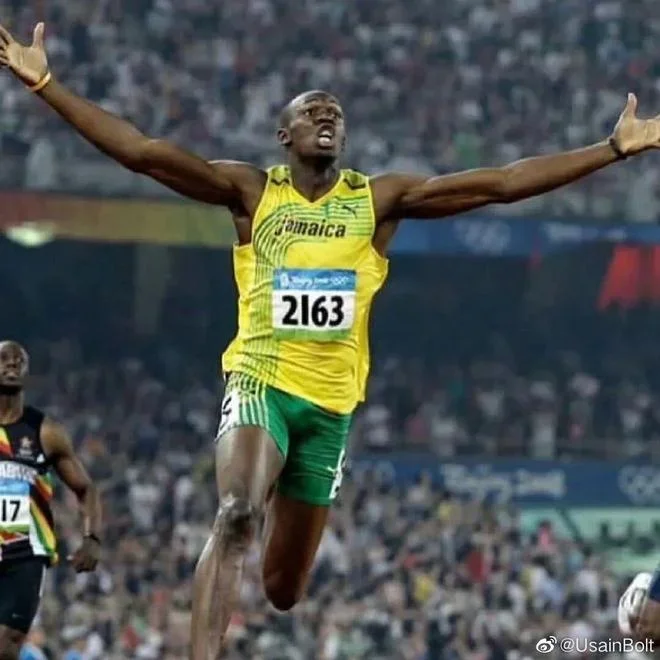
Simon Barnes, a former chief sports columnist for *The Times* and a writer with deep literary sensibility, spoke those poignant words. I could somewhat grasp the conflicted psychology of such a veteran—they had witnessed too many track miracles, only to be crushed by too many doping scandals. The journey from belief to awe, to doubt, and finally to cynicism is all too familiar. A miracle unfolds before your eyes, but how can you be sure it’s genuine?

Sabastian Sawe broke the two-hour barrier in the marathon. He is undeniably the first to achieve this in a formal competition, though not the only one. Regardless, his time of 1 hour, 59 minutes, and 30 seconds instantly became a global celebration. Just like Bolt in the Bird’s Nest, or Bolt’s 9.58 seconds in 2009. Yet faint whispers persist: Is this real?
**I. Is This Real?**
Bolt ran 9.58 seconds, the fastest ever. However, the second to fifth fastest men’s 100-meter sprinters in history have all been suspended for doping. Excluding Bolt, the top 20 performances on the all-time list were all set by athletes who have faced doping bans. Sawe is clean—he has never failed a drug test. He is even one of the most vocal advocates for increased testing to prove his innocence. But such a dazzling achievement, born on soil tainted by doping, inevitably invites skepticism from Western media. His victory celebration was also unusual: he raised his shoes, an Adidas high-tech lightweight model, displaying handwritten words: “1:59:30 WR SUB2.”
East Africans dominate elite long-distance running, but doping issues have plagued this group in recent years. The women’s marathon world record holder, Ruth Chepngetich from Kenya, was suspended for three years in 2025. 2021 New York Marathon champion Albert Korir was also banned. Former world record holder Wilson Kipsang faced a ban. Past London Marathon winners Geoffrey Mutai and Stanley Biwott have been suspended. The list includes champions from Boston, Paris, and Chicago. Even three pacemakers from Eliud Kipchoge’s 2019 sub-two-hour challenge were implicated. Two years ago, London organizers boasted the “strongest ever” women’s field, yet 55 Kenyan runners were then suspended for doping.
To his credit, Sawe acknowledged the issue and took a unique approach. Last summer, after Chepngetich’s failed test, Sawe and his team contacted World Athletics’ Athletics Integrity Unit (AIU). They proactively requested stricter, more frequent testing during his preparation for a September 2025 world record attempt in Berlin. The frequency reached 25 tests in two months—roughly one every three days. They also demanded the highest level of professional analysis. These initiatives came from Sawe himself, determined to face the strictest scrutiny and avoid any doubts.
In 2026, Sawe plans to undergo 25 tests throughout the year, with costs indirectly covered through his Adidas sponsorship. Industry insiders believe increased frequency is the best way to detect doping. This method helped AIU catch Chepngetich, even though she had passed 15 out-of-competition tests before 2024. Standardization, higher frequency, and broader testing are the response to doping’s rise. With World Athletics’ support, AIU has invested millions to expand its testing pool. Previously focused on top ten athletes, road racing’s testing now covers the top 150. A blood testing lab has been established in Nairobi, meaning 25% of all track doping tests are now for Kenyan athletes. But no matter how hard Sawe tries, doubt persists.
**II. Fortune Favors the Bold**
Sawe wasn’t the only one to break two hours. Ethiopian half-marathon star Jemal Yimer Mekonnen, in his first full marathon, also ran under two hours. It’s the old London bus cliché: you wait ages for a bus, then two come at once. When Kipchoge ran 1:59:40 in Vienna with carbon-plated shoes, the result was not officially recognized. The organizer, Ineos boss Jim Ratcliffe, has since moved on to football with Manchester United. Sawe’s breakthrough in London, with compatriot Yimer just 11 seconds behind, pushed human limits further. Third-placed Jacob Kiplimo from Uganda clocked 2:00:35, also a world record. In the women’s race, Ethiopian Tigist Assefa broke her own marathon record. The runners-up also recorded world-best times.
Why did London become the stage for this new history? Weather was a huge factor: race start temperature was about 13°C. The women’s elite group started 30 minutes before the men. When the elites finished, it was 16°C. These conditions were mild for East Africans. Assefa’s strategy—fast start, then steady pace—benefited from the cool weather. Prize money also attracts top athletes. London offers five-figure sums for placings and six-figure bonuses for records, significant in track. Olympic revenue cannot match the economic incentives of road racing. Inviting half-marathon specialists like Yimer and Kiplimo created a pack dynamic that spurred faster times. Sawe later said that at 40 km, he felt confident because his biggest rival, Yimer, was fading—this being Yimer’s first marathon.
